
When Is the Next Full Moon!
June 27, 2026
Why Are Cruise Ships Prone to Outbreaks!
June 28, 2026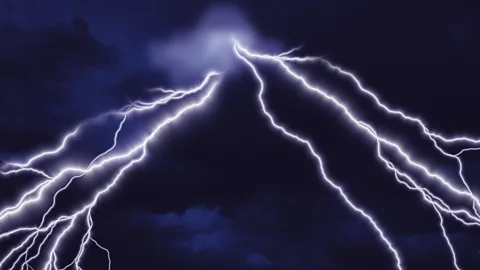
Thunder and lightning are among the most fascinating natural phenomena in the world. During a storm, people often notice a bright flash of lightning followed by a loud rumble or crack of thunder. This common experience leads many to ask: What causes thunder after lightning?
The simple answer is that thunder is created by lightning. When a lightning bolt travels through the atmosphere, it rapidly heats the surrounding air, causing the air to expand explosively. This sudden expansion creates sound waves that we hear as thunder.
Understanding the relationship between lightning and thunder helps explain why they occur together and why thunder is heard after the flash of lightning.
What Is Lightning?
Lightning is a powerful electrical discharge that occurs in the atmosphere. It usually forms inside storm clouds when positive and negative electrical charges build up.
As these charges increase, the atmosphere can no longer contain the electrical energy. The energy is released as a lightning bolt.
Lightning can occur:
- Within a cloud
- Between clouds
- Between a cloud and the ground
- Between a cloud and another object
What Is Thunder?
Thunder is the sound produced by lightning.When lightning strikes, it heats the surrounding air to temperatures that can reach approximately 30,000 degrees Celsius (54,000 degrees Fahrenheit). This is much hotter than the surface of the Sun.
The intense heat causes the air to expand rapidly. As the air expands, it creates a shock wave that moves outward through the atmosphere.That shock wave becomes the sound we hear as thunder.
Why Does Thunder Come After Lightning?
Many people think thunder happens after lightning, but both actually occur at the same time.The reason we see lightning first is because light travels much faster than sound.
Speed of Light
Light travels at approximately:
- 300,000 kilometers per second
- 186,000 miles per second
Because of this incredible speed, the flash of lightning reaches our eyes almost instantly.
Speed of Sound
Sound travels much slower than light.The speed of sound in air is approximately:
- 343 meters per second
- 1,125 feet per second
Because sound moves more slowly, it takes longer for thunder to reach our ears.As a result, we see the lightning flash first and hear the thunder afterward.
How Thunder Is Created?
Lightning Heats the Air
When lightning passes through the atmosphere, it instantly superheats the surrounding air.
Rapid Expansion
The heated air expands extremely quickly because of the sudden temperature increase.
Shock Wave Formation
This rapid expansion creates a shock wave that travels outward in all directions.
Sound Production
As the shock wave moves through the air, it creates the sound waves we recognize as thunder.Without lightning, thunder would not exist.
Why Does Thunder Sounds Different?
Not all thunder sounds the same.Sometimes thunder produces a sharp cracking noise, while other times it sounds like a long rumble.Several factors influence how thunder sounds.
Distance from the Lightning Strike
Nearby lightning often creates loud, sharp thunder.
Lightning farther away usually produces a lower and longer rumbling sound.
Terrain and Landscape
Mountains, buildings, forests, and other obstacles can reflect sound waves, affecting the way thunder is heard.
Length of the Lightning Bolt
A long lightning bolt generates sound from different points along its path.Because sound from different sections reaches the listener at different times, thunder may sound like a rolling rumble.
Measuring the Distance of Lightning:
A common method for estimating the distance of a lightning strike is to count the seconds between the flash and the thunder.
How to Calculate Distance
- Watch for the lightning flash.
- Count the seconds until you hear thunder.
- Divide the number of seconds by 3.
The result gives an approximate distance in kilometers.
For example:
- 6 seconds ÷ 3 = 2 kilometers
Alternatively:
- Every 5 seconds roughly equals 1 mile.
This method provides a useful estimate of how far away the storm is.
Different Types of Thunder:
Thunder can take several forms depending on the characteristics of the lightning.
Sharp Crack
A nearby lightning strike often creates a sudden cracking sound.
Loud Boom
Powerful lightning discharges can produce explosive booms.
Rolling Thunder
Distant lightning often creates a rumbling or rolling effect.
Continuous Rumble
Storms with frequent lightning can generate ongoing thunder sounds.Each type results from differences in lightning location, intensity, and atmospheric conditions.
Can Lightning Occur Without Thunder?
Technically, lightning always produces thunder.
However, people may sometimes see lightning without hearing thunder.
This occurs because:
- The lightning is very far away.
- Sound waves weaken before reaching the observer.
- Wind conditions carry sound in another direction.
This phenomenon is often called “heat lightning,” although it is simply distant lightning whose thunder cannot be heard.
Why Thunder Can Be Dangerous?
Thunder itself is generally not dangerous.However, thunder indicates that lightning is nearby, and lightning can be extremely dangerous.Lightning can cause:
- Serious injuries
- Fires
- Power outages
- Property damage
- Fatal accidents
The saying “When thunder roars, go indoors” is good safety advice because hearing thunder means lightning is close enough to pose a threat.
Thunderstorm Safety Tips:
Understanding thunder and lightning can help people stay safe during storms.
Seek Shelter Immediately
Move indoors as soon as thunder is heard.
Avoid Open Areas
Stay away from fields, beaches, and open spaces.
Avoid Tall Objects
Trees and poles can attract lightning.
Stay Away from Water
Swimming pools, lakes, and rivers increase lightning risk.
Avoid Electrical Devices
Lightning can travel through electrical systems and plumbing.Following these precautions can greatly reduce the risk of injury.
Scientific Importance of Thunder:
Scientists study thunder and lightning to better understand weather patterns and atmospheric processes.
Research helps improve:
- Storm forecasting
- Lightning detection systems
- Weather safety programs
- Climate studies
Interesting Facts About Thunder:
Here are some fascinating facts about thunder:
- Thunder cannot occur without lightning.
- A lightning bolt is hotter than the Sun’s surface.
- Thunder can sometimes be heard more than 25 kilometers away.
- Every second, dozens of lightning strikes occur around the world.
- The sound of thunder can vary greatly depending on weather conditions.
FAQ’s:
FAQs
1. What causes thunder after lightning?
Thunder is caused by lightning rapidly heating the surrounding air. The heated air expands explosively, creating sound waves that we hear as thunder.
2. Why do we see lightning before hearing thunder?
We see lightning first because light travels much faster than sound. The flash reaches our eyes almost instantly, while thunder takes longer to reach our ears.
3. Can there be thunder without lightning?
No. Thunder is always produced by lightning. If you hear thunder, lightning has occurred, even if you did not see the flash.
4. How can I tell how far away lightning is?
Count the seconds between the lightning flash and the sound of thunder. Divide the number by 3 to estimate the distance in kilometers.
5. Is thunder dangerous?
Thunder itself is usually not dangerous, but it indicates that lightning is nearby. If you can hear thunder, you should seek shelter because lightning can be hazardous.
Conclusion:
The answer to the question “What causes thunder after lightning?” lies in the relationship between electricity, heat, and sound. Lightning rapidly heats the surrounding air, causing it to expand explosively and create shock waves. These shock waves travel through the atmosphere as sound, which we hear as thunder.