
Perpetual Futures – A Crypto-Driven Force Reshaping Global Markets!
July 3, 2026
Central Bank Digital Currencies – How They Could Change Money!
July 4, 2026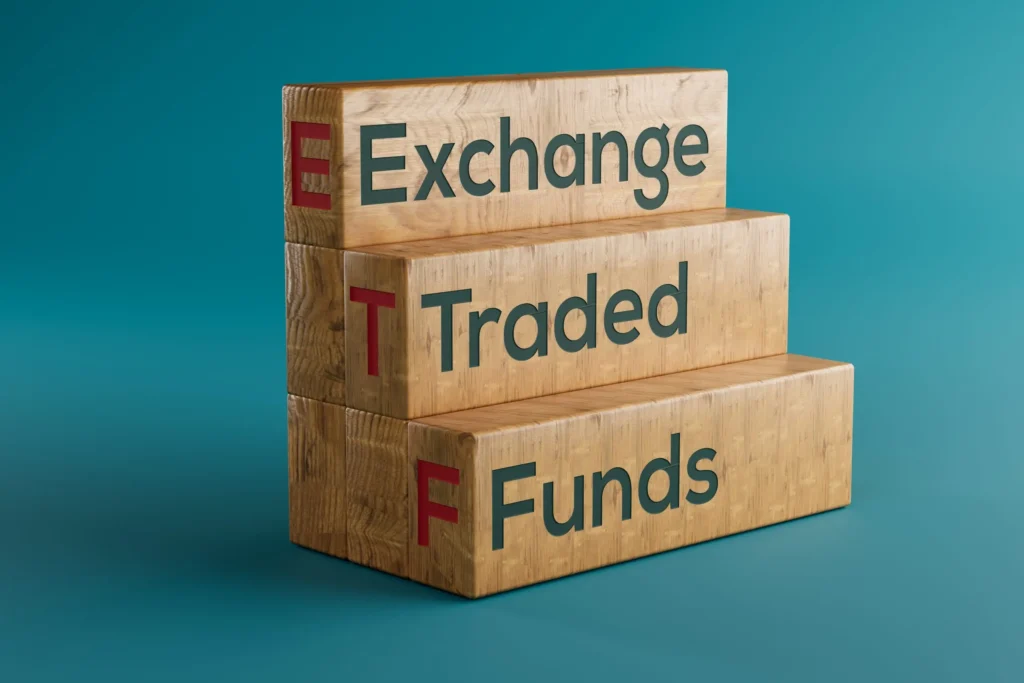
Exchange-Traded Funds, commonly known as ETFs, have become one of the most popular investment products in modern financial markets. They offer investors a simple, flexible, and cost-effective way to gain exposure to a wide range of assets, including stocks, bonds, commodities, and even entire market indexes.
Since their introduction in the 1990s, ETFs have attracted trillions of dollars from both individual and institutional investors. Their popularity continues to grow because they combine many of the advantages of mutual funds with the trading flexibility of stocks.
Understanding what ETFs are and how they work can help investors make informed decisions and build diversified investment portfolios.
What Is an ETF?
An Exchange-Traded Fund (ETF) is an investment fund that holds a collection of assets and trades on a stock exchange.An ETF may contain:
- Stocks
- Bonds
- Commodities
- Currencies
- Real estate assets
- Market indexes
Instead of purchasing individual securities, investors can buy a single ETF share that provides exposure to many different assets at once.This makes ETFs a convenient tool for diversification.
How Do ETFs Work?
ETFs are traded on stock exchanges just like individual stocks.Investors can:
- Buy ETF shares
- Sell ETF shares
- Trade throughout the day
- Monitor real-time prices
The value of an ETF generally reflects the combined value of the assets it holds.For example, an ETF that tracks a stock market index will usually rise and fall with that index.
The Structure of an ETF:
An ETF is managed by an investment company that purchases the assets represented by the fund.The company then issues ETF shares to investors.The ETF provider handles:
- Portfolio management
- Asset tracking
- Rebalancing
- Administrative operations
Why Are ETFs Popular?
Diversification
Diversification is one of the biggest benefits of ETFs.Instead of investing in a single company, investors can gain exposure to dozens, hundreds, or even thousands of securities through one investment.This helps reduce the impact of poor performance from any single asset.
Lower Costs
Many ETFs have lower management fees compared to traditional mutual funds.Because many ETFs passively track indexes, operating costs are often reduced.Lower expenses can improve long-term investment returns.
Flexibility
Unlike mutual funds, ETFs trade throughout the day.Investors can buy or sell shares whenever markets are open.This flexibility allows investors to respond quickly to market changes.
Transparency
Most ETFs disclose their holdings regularly.This allows investors to understand exactly what assets they own.Greater transparency helps investors make informed decisions.
Types of ETFs:
Stock ETFs
Stock ETFs invest primarily in equities.They may track:
- Broad market indexes
- Specific industries
- Geographic regions
- Growth companies
- Dividend-paying stocks
Bond ETFs
Bond ETFs focus on fixed-income investments.These funds may hold:
- Government bonds
- Corporate bonds
- Municipal bonds
- International debt securities
Commodity ETFs
Commodity ETFs provide exposure to physical commodities such as:
- Gold
- Silver
- Oil
- Agricultural products
Sector ETFs
Sector ETFs focus on specific industries.Examples include:
- Technology
- Healthcare
- Financial services
- Energy
- Consumer goods
International ETFs
International ETFs provide exposure to foreign markets.Investors can access:
- Emerging markets
- Developed economies
- Regional investment opportunities
These funds help diversify portfolios globally.
Index ETFs
Index ETFs are designed to replicate the performance of a specific market index.Popular examples track major benchmarks such as:
- S&P 500
- Nasdaq indexes
- Global stock indexes
Active vs. Passive ETFs:
Passive ETFs
Passive ETFs aim to track an index as closely as possible.The goal is not to outperform the market but to match its performance.These funds usually have lower fees.
Active ETFs
Active ETFs are managed by investment professionals who make decisions about buying and selling assets.The objective is to outperform a benchmark index.Active ETFs typically have higher fees than passive funds.
How Are ETF Prices Determined?
ETF prices fluctuate throughout the trading day.The market price depends on:
- Supply and demand
- Value of underlying assets
- Market conditions
- Investor sentiment
Special market participants help keep ETF prices close to the actual value of the underlying holdings.This process contributes to market efficiency.
Benefits of Investing in ETFs:
ETFs offer numerous advantages.
Easy Diversification
A single ETF can provide broad market exposure.
Accessibility
Investors can purchase ETFs through most brokerage accounts.
Liquidity
Most major ETFs can be bought and sold easily.
Cost Efficiency
Many ETFs feature relatively low management expenses.
Tax Efficiency
Certain ETF structures may reduce taxable events compared to some mutual funds.
Risks of ETFs
Although ETFs offer many benefits, they also involve risks.
Market Risk
ETF values can decline if the underlying assets lose value.
Sector Concentration Risk
Sector-focused ETFs may experience higher volatility.
Liquidity Risk
Some specialized ETFs may have lower trading volume.
Tracking Error
An ETF may not perfectly match the performance of its target index.Investors should understand these risks before investing.
ETFs vs. Mutual Funds:
ETFs and mutual funds share similarities but differ in important ways.ETFs:
- Trade throughout the day
- Usually have lower fees
- Offer real-time pricing
Mutual funds:
- Trade once per day
- Often involve higher management costs
- May require minimum investments
Both products can play valuable roles in investment portfolios.
ETFs for Long-Term Investors:
Many long-term investors use ETFs as core portfolio holdings.Benefits include:
- Broad diversification
- Consistent market exposure
- Lower costs
- Simplicity
The Growth of the ETF Industry:
The ETF industry has expanded dramatically over the past few decades.Today, thousands of ETFs cover nearly every asset class and investment strategy imaginable.This growth reflects investor demand for flexible, transparent, and cost-effective investment solutions.
FAQ’s:
1. What is an Exchange-Traded Fund (ETF)?
An ETF is an investment fund that holds a collection of assets such as stocks, bonds, or commodities and trades on a stock exchange like a regular stock.
2. How do ETFs differ from mutual funds?
ETFs trade throughout the day at market prices, while mutual funds are typically priced and traded only once at the end of the trading day.
3. Are ETFs suitable for beginners?
Yes. ETFs are often considered beginner-friendly because they provide instant diversification, lower costs, and easy access to various markets through a single investment.
4. What are the main benefits of investing in ETFs?
Key benefits include diversification, low expense ratios, liquidity, transparency, and the ability to trade easily on stock exchanges.
5. Can ETFs lose value?
Yes. Like all investments, ETFs carry risks. Their value can rise or fall depending on the performance of the assets they hold and overall market conditions.
Conclusion:
What are Exchange-Traded Funds (ETFs) and how do they work? ETFs are investment funds that trade like stocks while providing exposure to diversified portfolios of assets. They offer investors a convenient way to access markets, reduce risk through diversification, and manage investment costs effectively.